The Law Freezing Arrests of Draft Evaders: Procedural Defects and the Pr...
In the final week of its term, the Knesset passed a package of laws, among them a law…
Read More


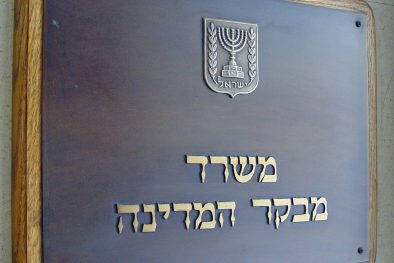
Israel’s High Court of Justice has unanimously invalidated the Knesset vote that elected the new State Comptroller and ordered a repeat election. The reason was a breach of ballot secrecy: several Knesset members recorded their votes on video. In the same period, the judges presiding over the trial of Prime Minister Benjamin Netanyahu reaffirmed their recommendation that the prosecution withdraw the bribery charge in Case 4000.
Adv. Maxim Rakov, Partner and Head of the International Department at ENR Law (Elbert Nazaretsky Rakov & Co.) and former Legal Advisor to Israel’s National Security Council, discussed both developments in a recent radio interview. The key questions and answers are presented below.
The High Court of Justice has ordered a repeat election for the State Comptroller. How do you assess the situation? Several media outlets write that the Prime Minister will have no choice but to accept the court’s decision.
The decision came as no surprise: the court had signaled in advance what it would be. Importantly, it was rendered unanimously by all five judges of the panel. There were differences among the judges in how firmly they framed particular points, but the conclusion was shared: the State Comptroller cannot take office, because his election was unlawful due to a breach of ballot secrecy.
Two scenarios are now possible. First, the Speaker of the Knesset schedules a new election and the members vote again. It is quite possible that the same candidate, Adv. Michael Rabello, will be elected once more, and this is precisely what the Prime Minister is counting on: the mobilization of coalition members worked last time and may work again. Second, the election is postponed until the next Knesset. The next Knesset, however, may prove far less favorable for the coalition; there may be a different coalition altogether. There is also a further factor: at present, Knesset members depend heavily on their party leaders, since candidate lists and primaries lie ahead and the members want to be re-elected. At the start of a new term they will have no such incentive, having already been elected for four years. Scheduling a new election now is therefore a perfectly logical course of action for the Prime Minister and the Speaker of the Knesset.
At the same time, Adv. Rabello himself has stated that he does not wish to assume such an important state office under these circumstances. In effect, he is acting in line with the High Court’s ruling.
He cannot act otherwise. What is he to do, walk into the office of the State Comptroller and declare himself the new Comptroller? The court’s ruling is binding; there is no alternative here. The only thing that remains possible is political sabotage: the Speaker of the Knesset could declare that he disagrees with the decision and therefore will not schedule an election. By the same logic, Justice Minister Yariv Levin has repeatedly stated that he disagrees with the appointment of Justice Yitzhak Amit as President of the Supreme Court and therefore will not convene the Judicial Selection Committee. But that is passive evasion. No one today can actively defy a ruling of the Supreme Court: under the law, actions taken against a court ruling have no legal effect. As matters stand, Adv. Rabello is not the elected State Comptroller.
In the end, judges were nevertheless appointed under an arrangement between the Minister of Justice and the President of the Supreme Court.
A compromise was reached because the system cannot function in a state of permanent deadlock. Delays are currently occurring in many matters, but that is precisely passive sabotage. To counter it, one must again turn to the court and file a petition for contempt of court and non-compliance with its ruling. Active resistance to a court ruling, by contrast, is impossible: such actions are legally void.
The judges in the Netanyahu trial have recommended that the prosecution withdraw the bribery charge in Case 4000. The position has provoked sharp debate. Adv. Zion Amir called the very filing of that charge a mistake by the prosecution, while former Deputy State Prosecutor Nurit Litman believes the prosecution should continue the case as long as a reasonable prospect of conviction exists. Is the court’s statement primarily a recommendation?
First and foremost, it is indeed a recommendation. It is not binding and is not always given. In essence, the court is telling the parties: after three years of proceedings, we see that this charge cannot be proven, so we suggest making everyone’s work easier by removing it from the indictment. The court is entitled to do so. The prosecution may accept the recommendation, but it is not obliged to.
There are several reasons why it might decline. First, the prosecution may believe that the court does not yet see the full picture. Roughly half the trial has passed: the prosecution has presented its witnesses, and the defense has cross-examined them. Now the defense will call its own witnesses, followed by an analysis of the entire body of evidence. The prosecution may expect that, in the end, the charge can still be proven. Second, there are tactical considerations: the graver charge keeps pressure on the defendant and may serve as an incentive for a plea agreement at a later stage. Third, there is an institutional reason. An indictment does not always end in a conviction: an acquittal is a normal part of the adversarial criminal process, and this is how it works in Israel, in England, and in the United States. Withdrawing a significant part of the indictment now, however, would effectively amount to the prosecution admitting that it acted wrongly. If, on the other hand, the court acquits Netanyahu, that is part of the rules of the game and a known risk from the outset.
How justified is either course of action by the prosecution?
Both accepting the court’s recommendation and rejecting it fall within the rules of the game. One further consideration may also play a role. If the bribery charge is withdrawn now, the decision will be made by the specific prosecutors currently handling the case. If, however, the court acquits the Prime Minister on this count in, say, two years, responsibility for the outcome may fall to different people. Such considerations may also be present.
Adv. Maxim Rakov is Partner and Head of the International Department at ENR Law (Elbert Nazaretsky Rakov & Co.). Admitted to practice in Israel and New York. Former Deputy General Counsel at the Prime Minister’s Office of Israel and Legal Advisor to Israel’s National Security Council. Over 25 years of experience in international law, banking regulation, and sanctions law.
This material is provided for informational purposes only and does not constitute legal advice.