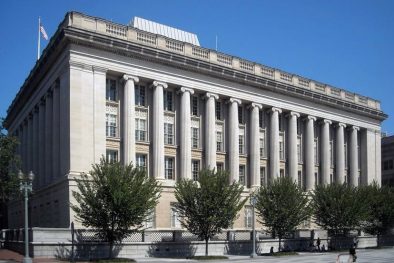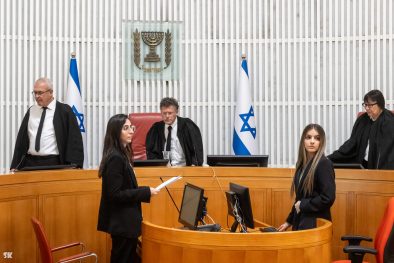
The State Comptroller Election and Case 4000: The Limits of Court Ruling...
Israel's High Court of Justice has unanimously invalidated the Knesset vote that elected the new State Comptroller and…
Read More


Interview with Adv. Maxim Rakov
In July 2026 the outgoing Knesset concluded its term with a series of laws that were immediately challenged in court. The High Court of Justice issued interim orders suspending the entry into force of the broadcasting market reform law and of the law halting the detention of ultra-Orthodox draft evaders. At the same time, the Mayor of New York, Zohran Mamdani, stated that he was examining the possibility of detaining the Prime Minister of Israel during his anticipated visit to the UN General Assembly in September.
Both subjects were addressed by our partner, Adv. Maxim Rakov, Head of the International Department at ENR Law and formerly Deputy General Counsel at the Prime Minister’s Office and Legal Advisor to Israel’s National Security Council, in a recent radio interview.
The entry into force of the broadcasting market reform law has been suspended. What does this involve?
The provisions suspended are those that take effect upon publication of the law. Provisions with a deferred commencement date have not been frozen, since there is time to consider the petitions on the merits before they take effect. In his decision, Justice Ofer Grosskopf held that the petitions raise serious arguments both as to the procedure by which the law was adopted and as to specific provisions it contains.
Does this mean the law is on its way to being struck down?
It is too early to draw that conclusion, because an interim order is not a ruling on the merits. Such an order requires two elements to coincide. First, the court must see a substantial likelihood that the petition will succeed. Second, there must be a need for urgent intervention: if the law takes effect and operates for several months, the harm caused in the meantime will be difficult to remedy even if the law is later annulled. That is why the court suspends the operation of the provision rather than striking it down.
Was the law halting the detention of ultra-Orthodox draft evaders suspended on the same reasoning?
Yes. The same justice found a high likelihood that the petition would succeed and noted that the law took effect immediately, and therefore suspended its operation. It is worth being precise about the substance of that law: it did not concern arrests as such, but their cessation, meaning a prohibition on applying enforcement measures to those evading conscription. The suspension preserves the existing legal position.
Why were other laws adopted in the same period not suspended?
The distinction lies between laws that operate immediately and laws with a deferred commencement date. The law limiting the powers of the Attorney General is due to enter into force on 1 January 2027. Roughly six months remain, which is sufficient time to consider the petitions on the merits, so there is no present basis for urgent intervention. The Basic Law on Torah Study falls into a different category: in the version adopted it contains no operative provisions and is declaratory in nature, so there is nothing to suspend. A petition against it has been filed and the matter will be addressed as the case proceeds and to the extent that proves necessary.
Does this indicate that the court is intervening in the legislative process more and more?
The movement runs in both directions. The court is indeed examining the annulment of legislation with increasing frequency, but to a significant degree the legislature itself creates that opportunity and in a sense invites it. Some of these laws were adopted in breach of procedure, and striking down a law on procedural grounds is considerably easier for a court than entering into the political substance of the matter. Others conflict with existing legislation, which requires the court to determine which norm prevails and whether a breach exists at all. The result is that the court is not merely entering the political arena: the Knesset is entering the legal one.
So the Knesset is drawing the court into politics?
There is a view that this is one of the purposes of such legislation: to bring the court into the political arena in the coming months so that a campaign can be built around confrontation with the judiciary. Whether that calculation is correct will become apparent at the elections scheduled for 27 October.
Is it possible that the Prime Minister of Israel, arriving for the UN General Assembly, could be detained by the New York police?
It is not possible, and I assume the mayor understands this. There is no basis for such a detention for several distinct reasons, each of which is sufficient on its own.
First, the United States is not a party to the Rome Statute of the International Criminal Court. Decisions of that court have no effect on US territory: the country is neither obliged to enforce them nor entitled to do so.
Second, matters of this kind fall within federal competence in the United States, not that of a state or a city. The New York police have no jurisdiction over conduct committed abroad. Were such jurisdiction to exist at all, it would belong to the Federal Bureau of Investigation, which is not subordinate to the Mayor of New York.
Third, a serving head of government enjoys personal immunity from the criminal jurisdiction of a foreign state under customary international law.
Fourth, as the host state of the United Nations headquarters, the United States undertook to secure the inviolability of heads of state and government and of members of delegations attending the organisation’s proceedings. That regime applies even to delegations of states with which the United States maintains no diplomatic relations.
Fifth, a practical consideration: the New York police will not act unlawfully even if instructed to do so by the mayor. Moreover, protection during visits of this kind is provided by the United States Secret Service.
What, then, is the purpose of such statements?
The purpose is political rather than legal. Statements of this kind sustain a particular public discourse and are addressed to a specific group of supporters. They carry no legal force.
Adv. Maxim Rakov is Partner and Head of the International Department at ENR Law (Elbert Nazaretsky Rakov & Co.). He is admitted to practice in Israel and in the State of New York. He previously served as Deputy General Counsel at the Prime Minister’s Office and as Legal Advisor to Israel’s National Security Council. His practice covers international banking regulation, compliance and sanctions law, cross-border corporate structures and matters of US law.
This material is provided for informational purposes only and does not constitute legal advice.
enr-law.com | [email protected] | +972 (9) 88 11 755